
U.S. and Iran Set for Talks in Oman
U.S. and Iran Set for Talks in Oman marks a pivotal moment in regional diplomacy, drawing broad attention from Middle Eastern diplomats, nuclear experts, and policymakers. These talks offer a focused opportunity to address technical aspects of Iran’s nuclear program while testing whether political will exists to resolve broader security disputes. Readers will gain a clear understanding of the potential benefits, the likely negotiating process, practical best practices for observers and stakeholders, and common pitfalls to avoid.
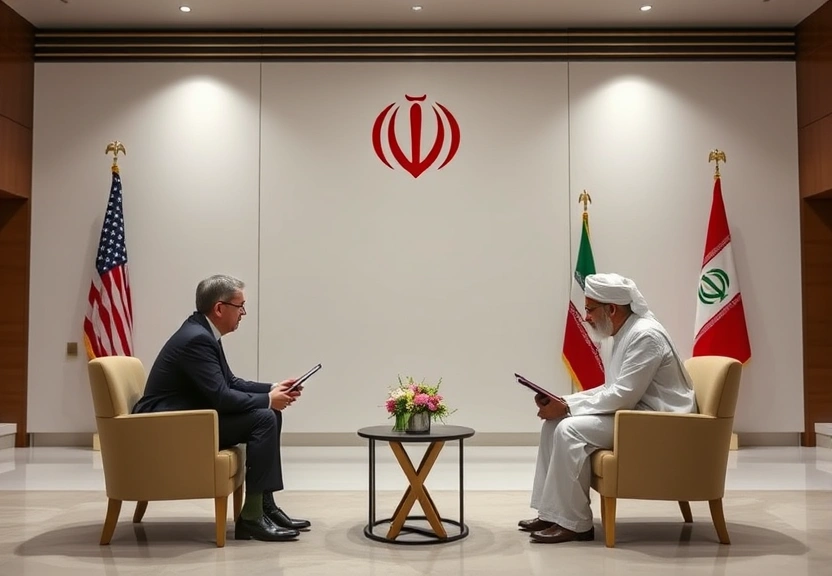
This article provides actionable recommendations for diplomats, analysts, and interested citizens who want to follow or influence the outcome. Adopt a proactive mindset – track verified reporting, evaluate confidence-building measures, and prepare clear contingencies for different outcomes. Stay informed and prepared to respond as negotiations unfold.
Benefits and Advantages
Why the talks matter: The immediate advantage of the meeting is the chance to narrow technical gaps on Iran’s nuclear program. Middle Eastern diplomats indicate cautious optimism that focused negotiations can yield verifiable constraints and monitoring arrangements that reduce proliferation risks.
Advantages for regional security
- Reduced nuclear uncertainty – Talks can produce clear timelines, inspections, and limits that make Iran’s nuclear activities more transparent.
- Confidence-building – Even partial agreements can lower the probability of military escalation and provide space for broader diplomatic engagement.
- Multilateral leverage – Oman’s neutrality and hosting role allows third-party mediators and regional stakeholders to support compliance and verification.
Benefits for U.S. diplomatic priorities
- Technical focus – Concentrating on nuclear safeguards increases the chances of measurable progress rather than open-ended political debates.
- Sanctions calibration – Successful steps can create pathways for phased sanctions relief tied to verifiable milestones.
- Risk management – Clear benchmarks and verification reduce strategic ambiguity and improve crisis stability.
Practical example: A small but meaningful agreement on additional inspections of enrichment facilities could permit incremental sanctions relief in exchange for specific timelines for dismantlement or conversion of certain enrichment capacities.
How-to Steps or Process
To understand operationally how negotiations will proceed, follow these practical steps and stages. U.S. and Iran Set for Talks in Oman will likely follow a phased, technical-first roadmap to maximize the chance of early gains.
Step 1 – Pre-talk confidence building
- – Establish secure channels for direct communication between technical delegations.
- – Agree on an initial agenda that prioritizes specific verifiable measures over broad political demands.
- – Involve IAEA or other neutral technical bodies early to set inspection protocols.
Step 2 – Technical negotiation phase
- – Map existing nuclear activities and agree on baseline data sharing.
- – Negotiate time-bound commitments for limits on enrichment levels, stockpile size, and research activities.
- – Define verification procedures, access rights, and dispute-resolution mechanisms.
Step 3 – Implementation and monitoring
- – Formalize agreements with clear milestones and conditional sanctions relief or incentives.
- – Institute joint monitoring teams and reporting schedules to maintain transparency.
- – Prepare contingency plans for noncompliance, including graduated responses and re-engagement mechanisms.
Actionable tip: For observers and analysts – create a simple tracker with milestones, verification steps, and dates to evaluate whether commitments are met. This will help translate complex diplomacy into measurable indicators.
Best Practices
Drawing on diplomatic experience and lessons from prior negotiations, these best practices increase the probability of constructive outcomes while minimizing the risk of breakdown.
1. Focus on measurable outcomes
- Set specific, time-bound commitments – Ambiguity invites dispute. Insist on technical specifics that can be independently verified.
- Use third-party verification – Involve the International Atomic Energy Agency or a mutually agreed neutral body to provide impartial assessments.
2. Sequence incentives and obligations
- Link benefits to compliance – Phased relief tied to monitored steps reduces political pressure for immediate concessions.
- Prioritize reversible measures – Use temporary relief and pilot projects as proof of commitment before broader changes.
3. Maintain parallel diplomatic channels
- Keep political and technical tracks separate – Address nuclear questions on a technical track while other issues follow separate diplomatic timelines to avoid stalemate.
- Engage regional stakeholders – Involve neighboring states and regional organizations to build legitimacy and reduce spoilers.
4. Communicate clearly and transparently
- Provide regular public updates – Clear, factual briefings reduce misinformation and stabilize expectations.
- Manage domestic audiences – Each side should plan credible narratives to explain concessions as reciprocal and conditional.
Practical example: During earlier nuclear agreements, success correlated with rigorous verification plans, stepwise sanctions relief, and consistent engagement by neutral technical bodies. Replicating those elements can help current talks make measurable progress.
Common Mistakes to Avoid
Diplomatic negotiations are vulnerable to predictable errors. Recognizing and avoiding these mistakes increases the odds of durable outcomes.
Mistake 1 – Mixing technical and broad political demands
- – Avoid insisting on unrelated political or security concessions as preconditions for technical progress. That approach slows momentum and raises the chance of collapse.
Mistake 2 – Overpromising or under-verifying
- – Do not grant broad relief without robust verification. Equally, do not demand unrealistic immediate changes that cannot be implemented within agreed timelines.
Mistake 3 – Neglecting regional stakeholders
- – Excluding neighboring countries or regional organizations risks creating spoilers who may react counterproductively.
Mistake 4 – Poor communication management
- – Allowing speculative or partisan narratives to dominate public discourse can erode trust and harden positions. Coordinate factual, transparent communications.
Actionable recommendation: Establish a small cross-disciplinary team to anticipate potential missteps and design mitigation strategies for each stage of the talks.
Monitoring and Practical Examples
To assess progress and respond effectively, practical monitoring approaches are essential. Use concrete metrics and real-world examples to clarify intent and performance.
- Metrics to monitor – number of inspections completed, declared stockpile changes, enrichment levels, number of sites with agreed access, timelines met.
- Example scenario – If Iran agrees to cap enrichment at a certain percentage and allows inspections at three critical facilities, the U.S. could authorize a limited, reversible sanctions relief package tied to verified compliance.
- Reporting cadence – Weekly technical summaries and monthly public reports maintain transparency without compromising negotiation confidentiality.
FAQ
What are the likely objectives when the U.S. and Iran Set for Talks in Oman?
The primary objective is to narrow technical gaps on Iran’s nuclear program through verifiable commitments and monitoring arrangements. Secondary objectives include creating a pathway for phased sanctions relief, reducing immediate military tensions, and opening space for later political dialogue on broader security concerns.
Who will likely participate in the talks?
Expect technical delegations from the United States and Iran, supported by representatives from Oman as host, and possibly experts from the International Atomic Energy Agency or other neutral technical bodies. Regional stakeholders may be briefed or engaged in parallel consultations to maintain broader legitimacy.
Can these talks resolve all U.S. demands?
Middle Eastern diplomats are cautiously optimistic about progress on nuclear safeguards, but they are pessimistic about rapidly resolving broader U.S. demands such as Iran’s regional activities or missile programs. The pragmatic approach is to achieve technical, verifiable wins first and address broader issues in subsequent tracks.
What short-term indicators would signal success?
Short-term indicators include agreed inspection protocols, initial IAEA access to certain sites, clear timelines for limits on enrichment capacity, and the establishment of a verification and reporting framework. Agreement on a phased sanctions-relief plan tied to these milestones would also be a strong positive sign.
What should stakeholders do to prepare for different outcomes?
Stakeholders should create contingency plans for multiple scenarios: successful technical agreement, partial progress, or breakdown. Recommended actions include updating sanctions enforcement protocols, preparing humanitarian and economic impact assessments, and developing rapid-response diplomatic channels to manage escalation risks.
How can journalists and analysts responsibly cover the talks?
Focus on verified information and expert analysis. Use milestone trackers, consult independent technical experts, and avoid amplifying unverified leaks or partisan commentary. Clear, factual context about verification mechanisms and timelines will help audiences understand the practical stakes.
Conclusion
U.S. and Iran Set for Talks in Oman represents a focused opportunity to produce verifiable progress on Iran’s nuclear program while managing broader regional risks. The most promising path is a phased, technical-first approach that links measured incentives to concrete, monitored commitments. Main takeaways: prioritize measurable outcomes, use third-party verification, sequence incentives and obligations, and maintain transparent communication.
Take action now – follow authoritative reporting, support neutral verification mechanisms, and prepare clear contingency plans for all outcomes. Engage constructively by tracking milestones and advocating for policies that favor verifiable, peaceful resolution over escalation. Stay informed and ready to contribute to the diplomatic momentum as the talks proceed.
Original Source
Este artigo foi baseado em informações de: https://www.nytimes.com/2026/02/06/world/europe/us-iran-talks-oman.html
