
Quanto custaria um Ford Ka hoje, com a correção da inflação?
Quanto custaria um Ford Ka hoje, com a correção da inflação? is a question many former owners and automotive enthusiasts ask when they remember the compact, polarizing hatch that reached Brazil in 1997. This article explains, step by step, how to convert historical prices into present-day values, presents the calculated result for the first-generation Ford Ka, and provides practical guidance for anyone assessing classic or older-car values.
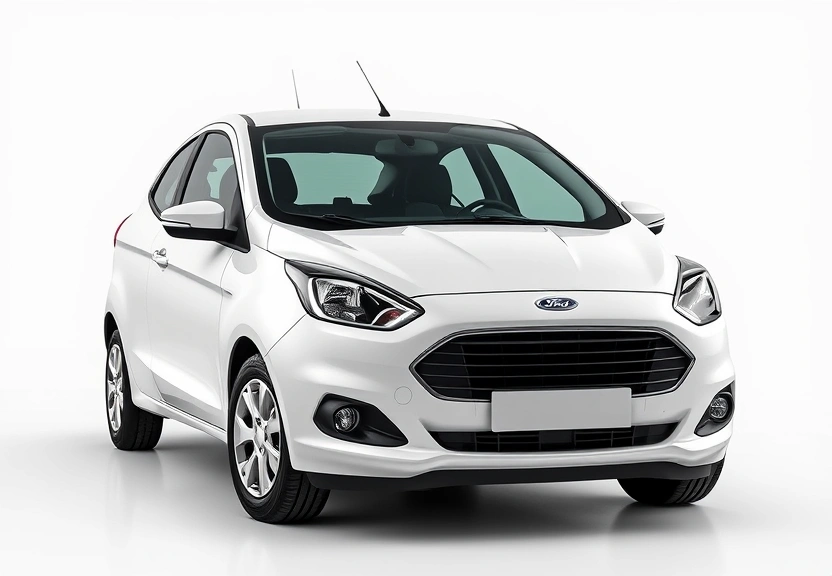
You will learn the historical pricing context, the inflation adjustment method using official sources, the resulting corrected value, and the limitations of inflation-only adjustments. If you want to know the real market perspective beyond arithmetic correction, follow the recommended steps and tools below to form a complete valuation. Consider this an authoritative guide to converting old car prices into today’s money using reliable indices and practical adjustments.
Context and quick result
The first-generation Ford Ka arrived in Brazil in September 1997. Two launch versions were commonly cited: the 1.0i priced at R$ 7,300.00 and the more complete CLX 1.3i priced at R$ 9,000.00. Production in Brazil ran from 1997 to 2008 in São Bernardo do Campo, and the model stayed on sale through imports until around 2021, receiving facelifts and a later generation that moved away from the original controversial styling.
Using the official Banco Central inflation calculator with the IPCA index, the accumulated inflation from September 1997 to the present produces an increase of approximately 420.71%. Applying that index to the CLX 1.3i launch price, the inflation-corrected value is approximately R$ 46,863.52. This figure answers the headline question: Quanto custaria um Ford Ka hoje, com a correção da inflação?
Benefits and advantages of performing an inflation correction
Adjusting an historical car price for inflation provides clear, objective benefits when you need context or comparison:
-
–
- Real purchasing-power comparison – Converts an old nominal price into a present-day figure that reflects general price level changes.
- Standardized baseline – Using IPCA or other official indices offers a replicable method for comparing vehicles across eras.
- Decision support – Helps owners decide whether to keep, sell, or restore a vehicle by comparing corrected historical cost to current market prices and restoration costs.
- Budgeting for collectors – Gives an initial estimate when planning acquisitions or restorations of older models.
–
–
–
How to calculate – step-by-step process
Below is a practical method to reproduce the calculation and apply it to other vehicles or years.
Step 1 – Identify the original price and date
Locate a reliable original price and the exact date. For the Ford Ka CLX 1.3i, use R$ 9,000.00 from September 1997.
Step 2 – Choose the inflation index
For Brazil, the most commonly accepted consumer price index is the IPCA (Índice Nacional de Preços ao Consumidor Amplo). This is the index used by the Banco Central and IBGE for official inflation tracking.
Step 3 – Use the Banco Central or IBGE official calculator
Access the Banco Central accumulation calculator or the IBGE data series and select the start and end dates. The tool returns the accumulated inflation percentage and the corrected monetary value.
Step 4 – Manual formula (optional)
If you prefer a manual computation, use the multiplier derived from the accumulated percentage. With an accumulated IPCA of 420.71%, the multiplier is 1 + 4.2071 = 5.2071.
Calculation example:
-
–
- Corrected value = Original price x Multiplier
- Corrected value = R$ 9,000.00 x 5.2071 ≈ R$ 46,863.52
–
Step 5 – Document sources
Record the index used, the source, and the exact date range for transparency. This is essential for professional valuations or historical comparisons.
Best practices when valuing older cars beyond inflation
Inflation correction produces a useful baseline, but market value depends on many other variables. Use these best practices to approach a realistic valuation.
-
–
- Assess physical condition – Mechanical state, bodywork, rust, and originality heavily influence value. A fully restored Ka can be worth far more than the inflation-adjusted price.
- Consider rarity and trim – Specific trims, limited editions, or low-production features raise demand and price.
- Review comparable sales – Check recent listings and auction results for first-generation Ka models to find market prices that reflect condition and location.
- Factor in safety and technology gaps – The first-generation Ka lacks modern safety features such as airbags and ABS, which affects desirability for many buyers.
- Account for restoration costs – If you plan to restore, estimate parts, labor, and time. Restoration can exceed the inflation-corrected purchase price.
- Use multiple indices if appropriate – For commercial or insurance purposes, consider IGPM or other indices if they match contract clauses, but disclose the chosen standard.
–
–
–
–
–
Common mistakes to avoid
When calculating or interpreting an inflation-corrected price, avoid these frequent errors.
-
–
- Confusing corrected price with market value – The inflation-adjusted figure is a purchasing-power equivalent, not a direct market appraisal.
- Using the wrong index or date – Different indices produce different results. Always use the index that aligns with your valuation purpose and specify the dates.
- Ignoring condition and provenance – Vehicle history, accident records, and originality are central to collectors and secondhand buyers.
- Overlooking taxes, fees, and regional differences – Transfer taxes, inspection costs, and local demand can inflate or reduce the sale price.
- Applying a single number as the final answer – Use the inflation figure as one input among several in any valuation exercise.
–
–
–
–
Practical examples and recommendations
Example 1 – Simple conversion:
-
–
- Original: R$ 9,000.00 (Sept 1997 CLX 1.3i)
- Index: IPCA accumulated 420.71%
- Corrected value: R$ 46,863.52
–
–
Example 2 – Market perspective:
-
–
- If you find a well-maintained, original Ka for R$ 30,000 today, compare that to the corrected figure of R$ 46,863.52 – the lower asking price may reflect condition, lack of demand, or market oversupply. Conversely, a fully restored show car priced at R$ 70,000 would suggest collector value beyond inflation correction.
Actionable tips:
-
–
- Use the Banco Central IPCA calculator for reproducible results.
- Cross-check online marketplaces and auction results to find comparable sales for the first-generation Ka.
- Hire a professional appraiser when preparing for sale, insurance, or restoration investment decisions.
–
–
FAQ
Is the inflation-corrected number the same as the car’s current market value?
No. The inflation-corrected number provides an equivalent in today’s currency of the original nominal price. Market value depends on condition, demand, rarity, and regional factors. Use the corrected value as a baseline, not a final sale price.
Why use the IPCA index to answer “Quanto custaria um Ford Ka hoje, com a correção da inflação?”
The IPCA is the official consumer price index widely used for macroeconomic and cost-of-living comparisons in Brazil. It is considered the standard for adjusting historical consumer prices. Using IPCA provides comparability and transparency.
How accurate is the Banco Central calculator result?
The Banco Central calculator uses official series and produces accurate arithmetic adjustments for the selected index and period. Accuracy is high for the inflation component, but the tool does not factor in vehicle-specific market dynamics, condition, or collector premiums.
Should I use another index like IGPM?
Only if your contract, insurance clause, or financial instrument references that index. IPCA is appropriate for consumer purchasing-power comparisons, while IGPM may be more volatile and reflect wholesale or contractual adjustments.
Does the corrected price consider import status or subsequent generations?
No. The inflation adjustment applies strictly to the nominal original price. For models later imported or revised by new generations, you must treat each variant separately. Document the specific version and market context before valuing.
How should I proceed if I want to buy or sell a first-generation Ford Ka today?
Start with the inflation-corrected figure as a reference, then:
-
–
- Inspect vehicle condition thoroughly.
- Obtain maintenance and ownership history.
- Compare with recent market listings and auction results.
- Consider professional appraisal for high-value transactions.
–
–
–
Conclusion
Quanto custaria um Ford Ka hoje, com a correção da inflação? Using the IPCA and the Banco Central calculator, the most complete early-configuration Ford Ka (CLX 1.3i priced at R$ 9,000 in September 1997) would be approximately R$ 46,863.52 in present-day purchasing power. This figure serves as a clear, documented baseline for comparisons and initial budgets.
Key takeaways:
-
–
- Inflation correction gives a standardized baseline for historical price comparison.
- Market value requires condition, rarity, and demand adjustments.
- Use official indices and document sources for transparent valuations.
–
–
If you want a tailored valuation for a specific Ford Ka with known condition details, or guidance on restoration cost estimates and market comparables, contact a qualified appraiser or consult recent auction and marketplace data. Take the next step: use the Banco Central IPCA tool with your specific dates, compare local listings, and seek a professional inspection before buying or selling.
Original Source
Este artigo foi baseado em informações de: https://canaltech.com.br/carros/quanto-custaria-um-ford-ka-hoje-com-a-correcao-da-inflacao/
