
A cidade com o maior parque de energia eólica da América Latina
A cidade com o maior parque de energia eólica da América Latina has become a benchmark for renewable development, technological innovation, and sustainable impact in Brazil. Located in Serra do Mel, the project combines large-scale wind generation with modern grid integration and community-centered strategies. This article explains what makes this project exceptional and how its lessons can be applied elsewhere.
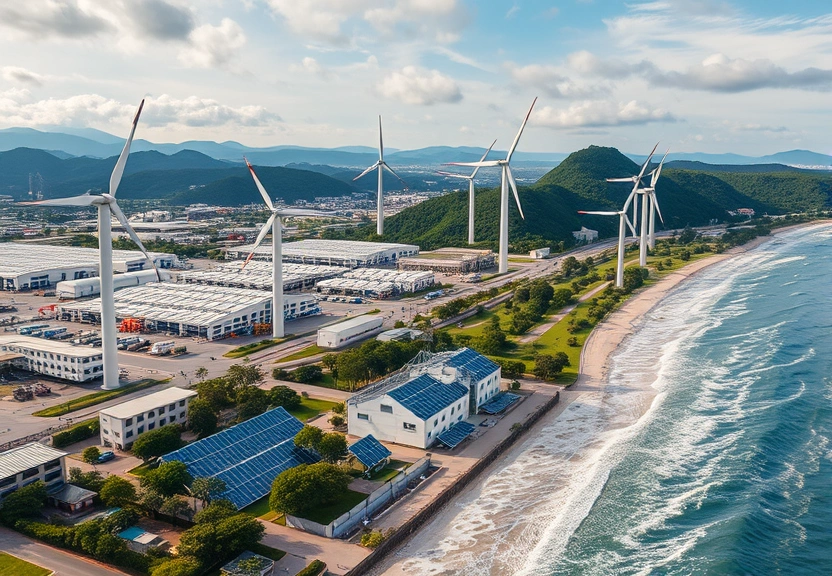
In the following sections you will learn about the technical advantages, the development process, practical best practices for replicating success, and common pitfalls to avoid when building or expanding large wind farms. Read on to gain actionable recommendations and examples you can use in planning, policy, or investment decisions – and consider how to support renewable growth in your region.
Benefits and advantages of the project
The Serra do Mel complex illustrates multiple layers of benefit – from clean energy production to social and economic gains. Understanding these advantages helps explain why A cidade com o maior parque de energia eólica da América Latina matters beyond its installed capacity.
-
–
- Large-scale carbon reduction – Wind generation displaces fossil fuels and yields a durable reduction in greenhouse gas emissions.
- Grid stability and diversity – Diversifying the energy mix with reliable wind output improves regional resilience.
- Local economic development – Construction and operations create jobs, boost local services, and attract suppliers.
- Technological demonstration – Deploying modern turbines and digital monitoring showcases advanced renewable technology in Latin America.
- Energy security – Domestic renewables reduce import dependence and exposure to volatile fuel prices.
–
–
–
–
Practical example – Serra do Mel integrates high-capacity turbines with supervisory control and data acquisition systems to optimize output. This reduces downtime and increases capacity factor compared to older installations.
How-to steps and development process
Building a world-class wind complex follows a disciplined sequence of technical, regulatory, financial, and social steps. Below is a condensed process based on industry best practice and the Serra do Mel experience.
1 – Resource and site assessment
-
–
- Conduct multi-year wind resource measurement with met masts and LiDAR.
- Analyze terrain, wake effects, and microclimate to optimize turbine layout.
–
2 – Environmental and social licensing
-
–
- Perform environmental impact assessments for biodiversity, water, and land use.
- Engage local communities early – present benefits, address concerns, and formalize benefit-sharing mechanisms.
–
3 – Technical design and procurement
-
–
- Select turbines with proven performance for local wind regimes.
- Design foundations, access roads, and grid connection to minimize costs and environmental footprint.
–
4 – Financing and contracting
-
–
- Structure debt and equity with clear revenue models – power purchase agreements or merchant exposure.
- Procure construction and operations contractors with strong track records.
–
5 – Construction, commissioning, and operations
-
–
- Phase construction to manage logistics for large blade and tower deliveries.
- Implement digital commissioning checks and predictive maintenance from day one.
–
Actionable tip – Use staged deployment to align generation capacity with grid upgrades, reducing curtailment risk and improving early revenue streams.
Best practices for design, construction, and operations
Adopting best practices ensures high performance and long-term sustainability. These approaches were central to why A cidade com o maior parque de energia eólica da América Latina achieved wide impact.
-
–
- Comprehensive wind resource modeling – Use both historical data and real-time telemetry to refine power forecasts.
- Community engagement programs – Deliver clear benefits: local hiring, training programs, and infrastructure improvements.
- Local content strategies – Prioritize local suppliers and service providers to multiply economic benefits.
- Grid integration planning – Coordinate with system operators to manage variability and enable ancillary services.
- Predictive maintenance and digitalization – Implement sensors and analytics to reduce downtime and extend asset life.
–
–
–
–
Practical example – Serra do Mel adopted remote condition monitoring to schedule maintenance proactively, lowering unscheduled outages and maintenance costs by measurable margins.
Common mistakes to avoid
Successful projects avoid strategic and operational errors that often undermine outcomes. Below are frequent mistakes and how to prevent them.
-
–
- Insufficient wind resource assessment – Short measurement campaigns or weak modeling lead to overestimated yields. Countermeasure – extend measurement duration and use industry-standard tools.
- Poor community relations – Ignoring local concerns causes delays and reputational damage. Countermeasure – create transparent communication channels and local benefit agreements.
- Underestimating grid constraints – Failing to secure transmission capacity results in curtailment. Countermeasure – coordinate with grid operators early and plan for incremental capacity.
- Weak procurement and contracting – Choosing lowest-cost bids without quality safeguards increases long-term risk. Countermeasure – adopt performance-based contracts and warranty clauses.
- Neglecting biodiversity impacts – Overlooking migratory paths or habitats leads to legal obstacles. Countermeasure – integrate conservation measures and monitoring programs.
–
–
–
–
Actionable tip – Establish a risk register with mitigation strategies mapped to each development phase. Review monthly during construction and quarterly during operations.
Technology and innovation highlights
Technical innovation is central to the project’s success. Serra do Mel leverages modern turbine designs, smart controls, and grid-friendly solutions that maximize output and minimize environmental impact.
-
–
- High-capacity turbines – Units with larger rotor diameters and optimized blades capture more energy at lower wind speeds.
- Advanced power electronics – Inverters and converters that support frequency regulation and reactive power control.
- Energy management systems – Software that forecasts generation and optimizes dispatch to reduce curtailment.
- Integration-ready storage – Battery systems and hybrid solutions to smooth variability and provide ancillary services.
–
–
–
Practical recommendation – Pairing wind generation with battery storage can increase the value of output by enabling time-shifting and participation in frequency regulation markets.
Economic and social impact
Beyond megawatts, the project delivers tangible socioeconomic outcomes. These include job creation, local infrastructure upgrades, and new business opportunities for suppliers and service providers.
-
–
- Employment – Direct jobs during construction and long-term operations roles for technicians, engineers, and managers.
- Supply chain – Opportunities for local fabrication, logistics, and maintenance services.
- Community development – Investments in roads, education, and health services as part of corporate social responsibility programs.
–
–
Example – Training programs aligned with project needs reduce skill gaps and ensure communities share in employment benefits, increasing social license to operate.
Monitoring, performance metrics, and continuous improvement
Continuous performance monitoring allows operators to optimize output and reduce costs. Adopt a metrics-driven approach that aligns operational KPIs with strategic goals.
-
–
- Key performance indicators – Capacity factor, availability, unplanned downtime, and LCOE (levelized cost of energy).
- Data governance – Ensure secure data flows, standardized reporting, and decision-making based on analytics.
- Continuous improvement – Use feedback loops to update maintenance schedules, blade pitch algorithms, and operational protocols.
–
–
Actionable tip – Implement a quarterly performance review that includes financial, technical, and social KPIs to ensure balanced progress.
FAQ
What city hosts the largest wind park in Latin America?
The largest wind park in Latin America is located in Serra do Mel, in the state of Rio Grande do Norte, Brazil. This complex represents a concentration of wind farms and infrastructure that together position A cidade com o maior parque de energia eólica da América Latina as a regional leader in renewable generation.
What is the installed capacity and typical output?
Installed capacity varies as projects expand, but the Serra do Mel complex contains several hundred megawatts of capacity. Actual output depends on wind conditions and capacity factor – modern large parks can achieve higher capacity factors than older sites, translating to more annual generation per megawatt installed.
How does the project impact local communities?
Impacts include job creation during construction and operations, supplier opportunities, and community investments in infrastructure and social programs. Effective projects establish benefit-sharing mechanisms and local hiring targets to maximize positive outcomes.
Can this model be replicated in other regions?
Yes. Replication requires robust wind resource assessment, appropriate grid infrastructure, financing mechanisms, and community engagement. Adapting best practices from Serra do Mel – such as digital maintenance and local content programs – improves success rates elsewhere.
What environmental measures are used to mitigate impacts?
Mitigation strategies include avian and bat monitoring, careful turbine siting to avoid sensitive habitats, habitat restoration, and continuous environmental monitoring. Projects should implement adaptive measures if monitoring indicates negative impacts.
How does the project integrate with the national grid?
Integration involves coordinating with the transmission system operator to secure interconnection capacity, upgrade lines where necessary, and implement grid-support functionalities such as reactive power control and frequency response. Planning and staged interconnection reduce curtailment risk.
What are the main financial considerations for investors?
Investors should analyze power purchase agreements, market structures, expected capacity factors, capital expenditure, and operational costs. Risk allocation in contracts, guarantees for grid access, and realistic revenue projections are essential for bankable projects.
Conclusion
A cidade com o maior parque de energia eólica da América Latina is more than a geographic distinction – it is a case study in scaling clean energy through technology, planning, and stakeholder collaboration. Key takeaways include:
-
–
- Robust resource assessment is non-negotiable for accurate yield forecasts.
- Community engagement and local benefits ensure social license and shared value.
- Technology and data-driven operations maximize output and reduce costs.
- Integrated planning with grid operators prevents curtailment and unlocks value.
–
–
–
To act on these insights – assess your region’s wind potential, engage stakeholders early, and design projects around proven technical and financial practices. If you are a developer, policymaker, or investor, consider visiting Serra do Mel or connecting with operators to learn directly from their experience. Strong commitment and disciplined execution can replicate this success elsewhere – and accelerate the transition to a sustainable energy future.
Next steps – perform a professional wind resource study, develop a community engagement plan, and start preliminary grid impact analyses. These concrete actions will put you on a direct path toward building a high-impact wind project inspired by the example of Serra do Mel and A cidade com o maior parque de energia eólica da América Latina.
Original Source
Este artigo foi baseado em informações de: https://olhardigital.com.br/2026/02/05/curiosidades/cidade-com-maior-parque-de-energia-eolica-da-america-latina/
